
What's your next?
Most businesses arrive at June with a narrative about the year. Revenue is tracking reasonably well, or the shortfall has a reasonable explanation, or the original plan is still achievable if the second half delivers the way the team expects. The story holds together, the explanations are accepted, and the business moves into July carrying the same assumptions it brought into January.
What most businesses conduct in June is not a mid-year review. It is a mid-year defense of the original plan.
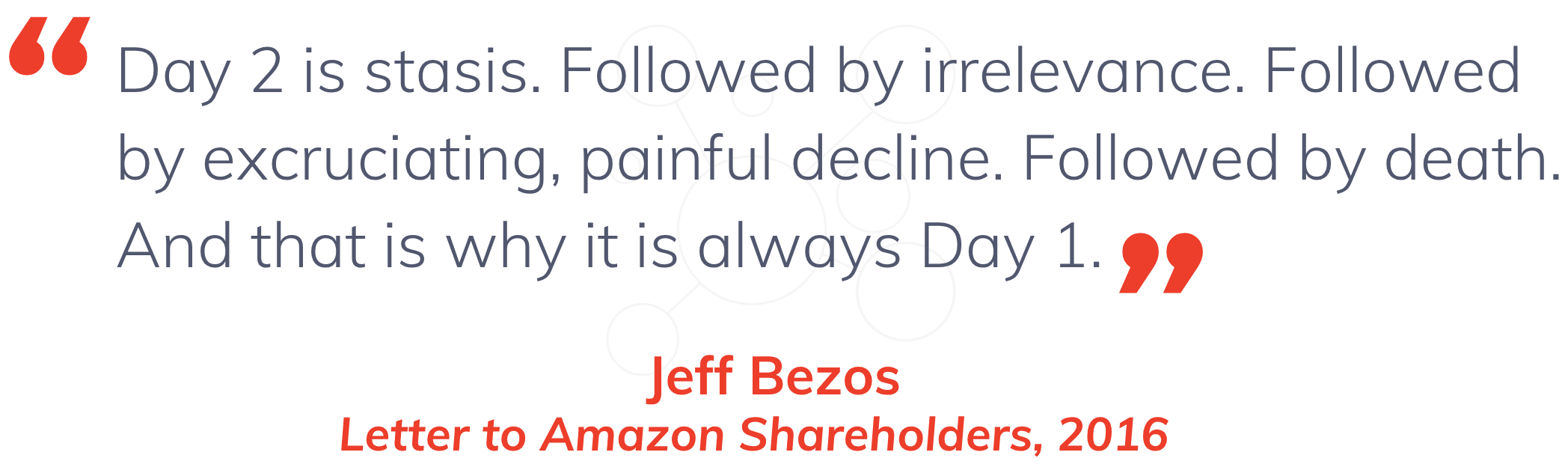
In his 2016 letter to Amazon shareholders, Jeff Bezos was not describing dramatic collapse. He was describing the slow consequence of comfortable explanations accepted in place of uncomfortable questions, the kind that build quietly over time until they can no longer be ignored. Day 2 does not announce itself. It accumulates.
The mid-year review is the discipline that interrupts that accumulation.
Every gap between where the business stands today and where the January plan said it would be is a signal, the favorable ones as much as the unfavorable ones. Revenue that came in ahead of forecast often points to a market opportunity the original plan underestimated. A margin that slipped below target says something about cost structure, pricing discipline, or the mix of business the year has actually produced versus the mix that was assumed. A pipeline growing faster than the model expected reveals where demand is concentrating and whether the resources behind it are still pointed in the right direction.
These are not problems to explain. They are questions to ask.
When leaders treat a variance as something to justify, the mid-year review becomes a retrospective. When they treat it as something to interrogate, it becomes a tool. The distinction matters in practice, not just in principle. A shortfall driven by market conditions requires a fundamentally different response than one driven by pricing execution or sales capacity. A business running ahead in one area and behind in another is not simply performing at plan. It is showing leadership something specific about where real momentum lives and where it does not. The leaders who ask those questions in June are not managing the year. They are competing in it.
The second half of the year goes to the businesses that used the midpoint not to validate their assumptions but to update them. The ones who arrive at Q3 with a current picture of reality, a revised forecast, and resource decisions already made. The ones who identified in June which priorities still hold and which no longer fit the business the year has actually revealed. The ones who made the difficult calls early enough for those calls to matter.
A forecast built on current reality is a decision-making tool. A forecast built on original assumptions is a comfort document. The mid-year review is the moment that separates those two. It is not a calendar obligation or a reporting exercise. It is the practice that determines whether a business is led into the second half or simply carried into it.
Practical Takeaways
- Treat every meaningful gap between plan and actual as a question, not an explanation. Ask what it reveals about an assumption that may no longer hold.
- Sort those gaps by cause before responding. A shortfall driven by market conditions calls for a different fix than one driven by execution or pricing.
- Build your second-half forecast on what you know now, not what you assumed in January.
- Make the decisions you have been deferring before July, while there is still time for them to change the outcome.
- Run the review as a leadership event, not a finance exercise. The answers should produce decisions, not updated slides.
The second half belongs to whoever planned for it in June.
Create Your Next!
Nelson Tepfer
Founder & CEO



Revenue growth is rarely the result of guesswork. It comes from understanding the drivers behind demand, pricing, customer behavior, and market opportunities. This piece explores how effective revenue modeling helps organizations forecast growth, evaluate new products and markets, and make more confident strategic decisions. By combining financial forecasting with market insights and ongoing refinement, businesses can build a stronger foundation for sustainable growth while reducing uncertainty and risk.

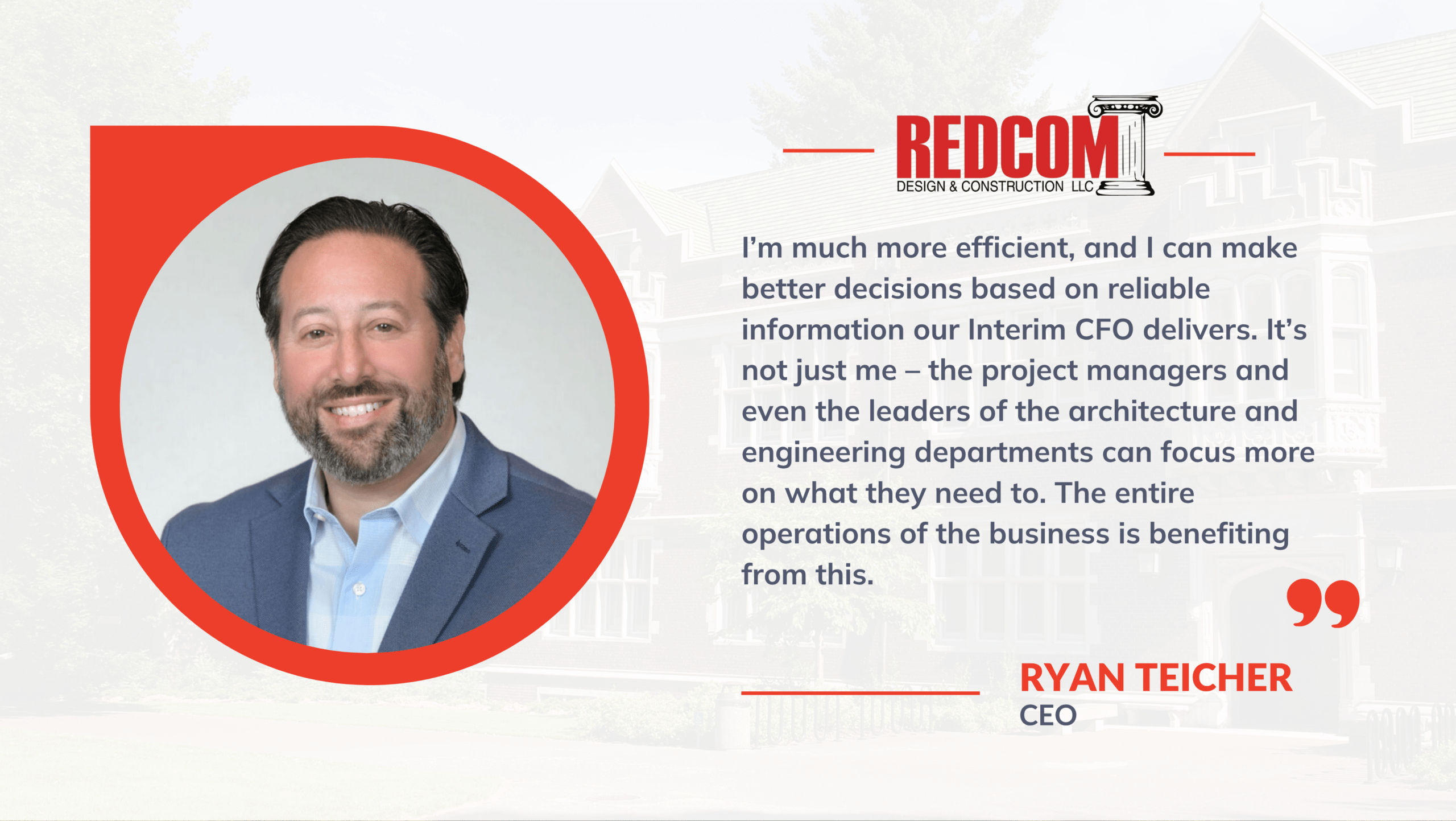
REDCOM Design & Construction had built a successful business taking projects from “trees to keys” – raw land through design, engineering, and construction. But as the company grew, the financial complexity behind that model began to outpace its reporting infrastructure. With Interim CFO leadership from ProCFO Partners, REDCOM gained reliable financial visibility, faster reporting, and departmental insight that helped leadership make more informed decisions and achieve key business goals far sooner than expected.


Brenton Westrich
Brenton Westrich is a seasoned finance leader and strategic advisor with more than two decades of experience partnering with CEOs and Boards to drive growth, profitability, and enterprise value. He brings deep expertise across SaaS, health technology, biotech and technology-enabled services, with a track record of guiding organizations through rapid scale, complex operating environments, and successful exit events. [Read More]

Ronald J. Fiore
CFO | Principal
Ronald J. Fiore is a seasoned CFO with a track record of helping middle-market and entrepreneurial companies scale, strengthen financial operations, and improve profitability. He brings expertise in building finance functions, enhancing reporting visibility, and partnering with leadership teams to drive strategic decision-making and long-term value creation. [Read More]