
What's your next?
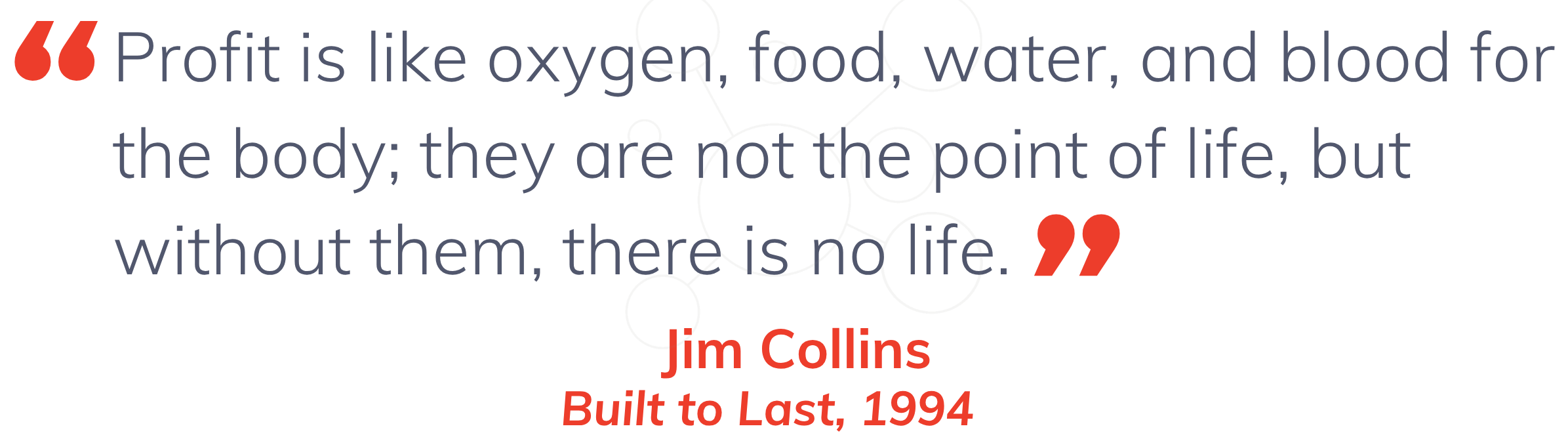
Most growing companies have a disciplined approach to revenue. They forecast it, protect it, build strategy around it, and celebrate when the number moves in the right direction. Revenue is visible, and visibility makes it feel managed.
Profit receives a different kind of attention. It arrives at the bottom of the income statement as whatever remains after costs are covered, and leaders tend to review it rather than design for it. The assumption is that if revenue grows, profit will follow. That assumption holds until it does not, and by the time it breaks, the erosion is already well underway.
The distinction between managing revenue and optimizing profit is one of the most consequential gaps in financial leadership, and it is more common than most leaders realize. A business can grow its top line every year and still watch its financial position quietly weaken as margins compress, overhead expands with the business rather than in proportion to it, and certain customers or service lines consume more than they return. Revenue growth creates momentum, but momentum alone does not generate margin. Only discipline does.
Financial leaders already recognize the urgency. In PwC’s May 2025 Pulse Survey of Fortune 1000 and private company executives, improving the margin was the only priority selected by a majority of CFOs when asked where they intended to allocate resources over the next twelve months. The awareness is there. What is often missing is the visibility to act on it, the ability to see precisely where margin is being created and where it is being consumed across the business.
Profit optimization is not about cutting. It is about building the clarity that allows leaders to understand which parts of the business are generating real return and which parts are working hard to break even, which customers are profitable to serve at scale, which pricing reflects the actual value delivered, and which costs are structural versus the accumulated weight of decisions no one has revisited. These are questions that most leadership teams do not ask with the frequency or rigor the answers deserve.
When financial leadership is embedded at the right level, profit stops being treated as a residual and starts being treated as a result, one that must be designed for rather than simply waited on. Margin analysis becomes a regular leadership conversation instead of a quarterly surprise. Pricing gets examined against cost and value, not just competition. Resource allocation reflects where the business actually earns, not simply where it is active. The shift is not dramatic in any single moment, but over time it changes what leadership teams pay attention to, which conversations happen before decisions are made, and how confidently the organization can invest in its own growth.
The companies that optimize profit are not necessarily the ones growing fastest. They are the ones growing most deliberately, because they understand what their growth actually costs and what it actually produces.
Practical Takeaways
- Examine whether your business tracks profitability at the level where decisions are actually made, by customer, by service line, by department, not just at the top of the income statement.
- Review pricing against cost and value delivered, not just against what competitors charge, and revisit that analysis on a regular cadence rather than only when margins visibly decline.
- Identify the costs in your business that have grown alongside revenue without anyone deliberately choosing to increase them, and evaluate whether they still reflect current priorities.
- Shift the leadership conversation from what happened last quarter to what the financial data reveals about where margin opportunity exists going forward.
- Treat profit as something your leadership team designs for, not something that shows up after everything else has been decided.
Create Your Next!
Nelson Tepfer
Founder & CEO




Having the right financial leadership can mean the difference between growth and stagnation. Discover how a fractional CFO brings strategic expertise to transform your business.

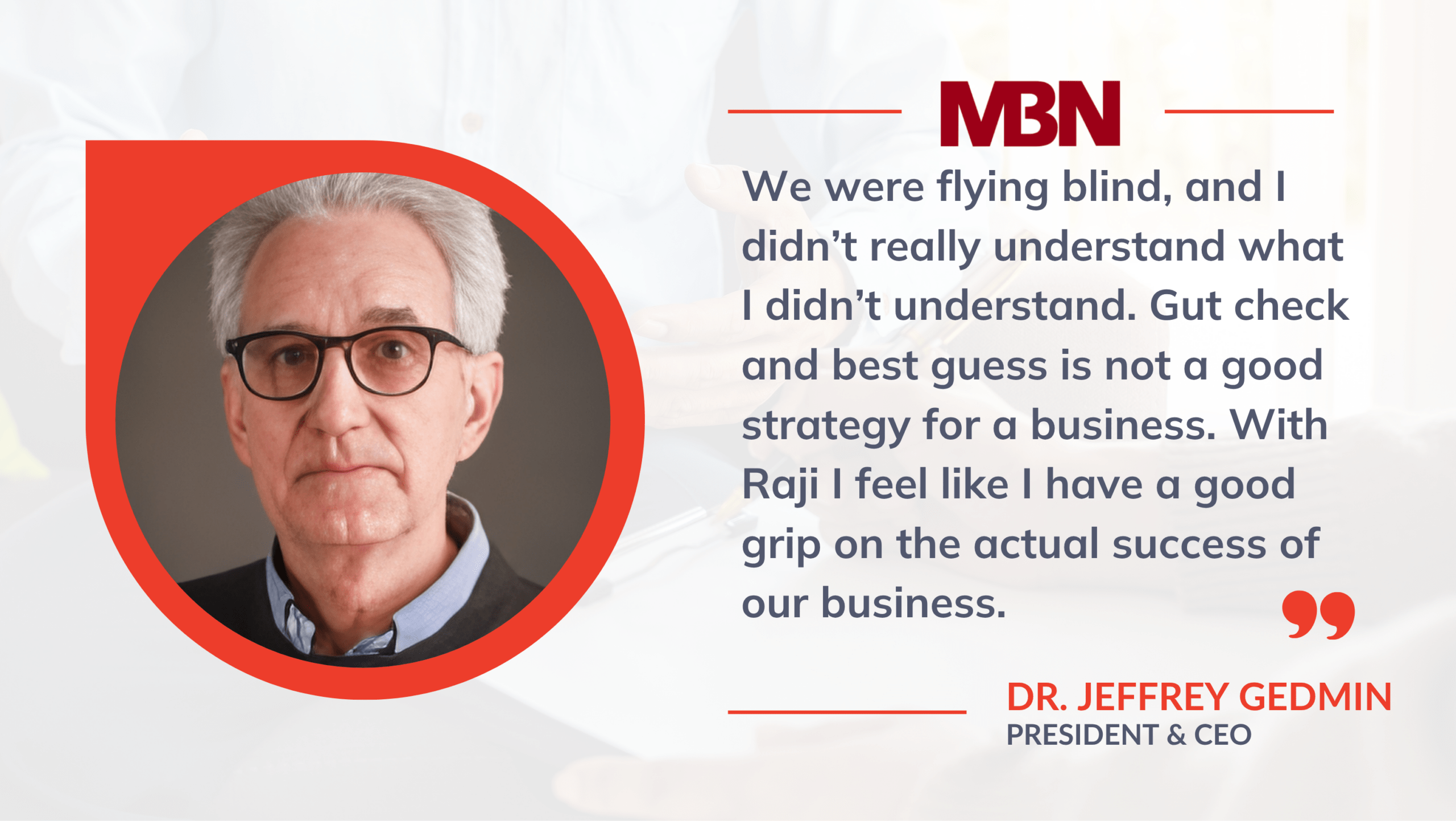
MBN needed more than reporting and reconciliations. It needed perspective. With federal oversight, taxpayer accountability, and a mission that extends beyond financial stewardship at MBN carries high stakes. “We’re not a commercial enterprise, but we have to operate with the same, if not greater, rigor,” Jeff Gedmin, President and CEO, explains. MBN brought in Raji Kalra, a ProCFO Partners CFO, to bring systems thinking, financial visibility, and strategic clarity to a leadership team balancing mission, operations, and compliance.


Art Troccoli
Art Troccoli is an accomplished financial executive with extensive experience delivering improved financial and operational performance. He has earned a reputation for determining the keys to an organization’s profitability and focusing on ways to drive sustainable improvements. His success stems from the ability to work with business leaders and managers to understand their goals and develop appropriate strategies to achieve them. [Read More]

Juan Ramirez
CFO | Principal
Juan Ramirez is a CFO with over 30 years of experience with a strong control environment mindset developed throughout the early part of his career in Audit and Controller roles. He is a senior finance executive and strategic business partner who optimizes operations to ignite growth across the global organizations. [Read More]