
Client Story

$200K to
Three-Quarters
of a Million
“We’ve paid a million dollars in equipment in cash, doubled down on our loan, and still maintained our cash position while continuing to reinvest in the company.”
Ashly Miller
Owner
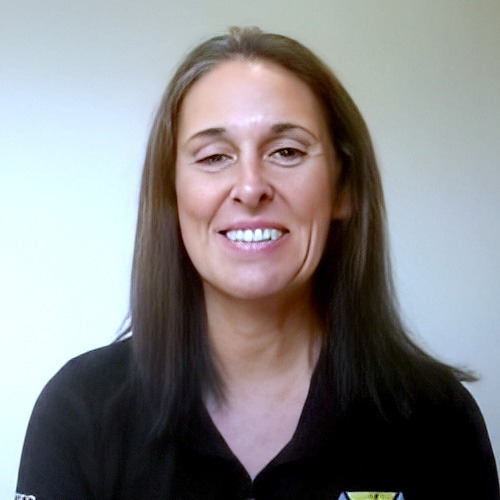
Ashly Miller bought Abbottstown Industries, an original equipment manufacturer in Pennsylvania, six years ago. She’s not a machinist, an engineer, or a financial guru, and she’s never pretended to be one. Walking into a shop floor that had been run by the same people for 45 years, she told them upfront that she’d be learning as she went. The financials had bothered her since the start. Profitability swung hard from period to period and there wasn’t accuracy or accountability for what to expect. Among other needs, she wanted a better handle and observability on the financials.
Why Abbottstown Engaged a Fractional CFO
Abbottstown had no cash forecast, no formal budget, and no clear read on where collections stood or when vendors actually needed to be paid. Ashly had looked at bringing on an in-house financial hire and had explored a few fractional CFO firms, but nothing moved past conversation until her Vistage chair put her on the phone, mid-meeting, with Nelson Tepfer, founder and CEO of ProCFO Partners. That call led to Joe Shake, a fractional CFO with a background in business turnaround work, being matched to Abbottstown.
“ProCFO Partners seemed very accessible, which was wonderful,” Ashly said of that first contact. What set ProCFO Partners apart from the other options she’d researched was the sense that the engagement would be built around what she needed, not fit into a predetermined package.
A Personal Financial Fit
Ashly was introduced to Joe Shake, a ProCFO with a background in business turnaround work. Joe’s experience inside the same ERP system Abbottstown runs on removed a layer of ramp-up that would have otherwise slowed things down, and his turnaround background mattered to her even though she didn’t think the business needed a full turnaround.
“It did feel really important to me that Joe had that ability and that knowledge and that experience,” Ashly said, “that if we did find out when we dug into the financials that we were in a really bad place, that he would be able to get us out.”
What Joe found when he arrived matched her instinct. Abbottstown wasn’t in crisis, it was missing tools. An existing culture of collaboration meant that early on, Joe could see the positive potential. “The Abbottstown team is incredible. While they are not accountants per se, they didn’t shy away from wanting to understand what I was asking them to do with the tools we were introducing.”
The Conversation That Reset Connection
A few months into the engagement, Ashly was concerned about progress. “It was nothing against Joe,” she clarifies. “Part of it was learning that to get what I needed, I should ask for it.” Here is another benefit where the fractional CFO firm model comes in: Ashly raised her concern with Nelson to get honest feedback, and Nelson worked with Joe to develop a more aggressive pace on the work.
“You guys termed it as ‘mean Joe,'” Joe said, laughing. “The funny thing is, that has stuck. I like to keep mean Joe locked in a cage, and you occasionally will come back and say to me, ‘please let Joe out of his cage, because that’s what I need right now.'”
What followed was a reset: both the client and ProCFO naming what they wanted from the relationship and what accountability would look like going forward. There’s power in a partnership that knows when friction can help the work, and that direct communication is a shortcut to results. Sounds easy enough, but often in business good work doesn’t get done simply because people don’t talk to each other.
Metrics That Moved Abbottstown
- Weekly cash position: Grew from roughly $200k to a steady $750k, holding consistent week over week.
- Cash flow forecasting: Projections now run six to eight weeks out with no material swings, replacing what had been no forward visibility at all.
- Reinvestment without depleting reserves: Abbottstown paid cash for roughly $1 million in equipment while doubling down on loan payments, all while maintaining its cash position.
- Collections and payables discipline: Customers are being collected from on a 30-day basis rather than stretching to 90, and vendor payments are managed without cash fluctuation.
- Departmental budgeting: The company is now breaking its budget out by department, starting with its mixers line, after building its first full budget the previous year.
“Using the cash we have to reinvest in the company, I can’t honestly say I would have been comfortable doing that without Joe’s help,” Ashly said. “I didn’t have the clarity. I couldn’t see eight weeks in the future that I was going to still maintain that amount of cash.”

Joe pointed to a specific moment last November as the clearest example of what the engagement built. He and Ashly brought the leadership team into a conference room to build the company’s first department-level budget from scratch, working off historical numbers and asking the team how far they were willing to push themselves. “Not one of those people in that room pushed against new ideas,” he said, describing the resistance he expected and didn’t get. “Every person in that room was willing to say, ‘you know what, I’m not sure how I’m going to do it, but I think we can.’ That’s the best answer you can get out of anybody.”
Joe also credits ProCFO Partners’ Thought Collective for giving him a resource no single fractional CFO has on their own. “No matter what the issue is, the thought collective has always helped me find answers,” he said.
A Leadership Style Built on Not Knowing Everything
“I walked into this business knowing I didn’t know everything and I would have to learn from the ground up,” Ashly said. “I can’t walk in and act like I know everything, because that’s just not true, and I’m never going to gain credibility with anybody.”
That posture shaped how she engaged with ProCFO Partners. “Sometimes it’s great just to get a third-party opinion,” she said. “ProCFO Partners has been excellent in that, just bringing me an additional person or two to say, I see what you’re doing, but the best practices are these.”
Joe sees that willingness to ask as the difference between businesses that grow and businesses that don’t. “The struggle that a lot of companies have is they feel too arrogant within themselves – ‘this is my business, I understand it, I know it better than you, don’t tell me what to do.’ And their businesses fail because of it,” he said. “The fact that Ashly doesn’t shy away from asking questions is why the sky’s the limit of what Abbottstown can do.”
What Comes Next
Abbottstown built its first full company budget last year. This year, the goal is department-level budgets, starting with the mixers line, so Ashly can see profitability broken out by area rather than as a single blended number – the kind of visibility that wasn’t possible when the company had no forecast at all.
“An organization like ProCFO Partners, that’s going to work with you and get you what you need, is fantastic,” Ashly said. “You can’t get any better than that.”