
Client Story

From the Field
to the Financials
“I’m looking ahead instead of constantly being reactive to what’s going on.”
Marc Kurowski
President & CEO
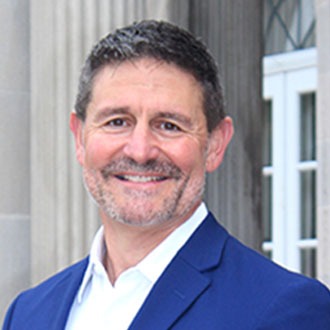
K&W Engineers is a civil engineering firm based in Harrisburg, working across the eastern half of Pennsylvania. It brings civil engineers, landscape architects, land surveyors, and in-house geotechnical staff together under one roof, and it has built a specialty in site design: higher education, K-12, and a particular strength in athletics, from tennis courts and running tracks to full stadium builds. Larger commercial and healthcare campus work rounds out the client base.
As K&W grew from a handful of employees to nearly 30, financial complexity grew too. Marc knew exactly where his many leadership strengths were – among them, when to know you need somebody else’s expertise.
Why K&W Engineers Engaged a Fractional CFO
“My lane is pretty predominantly engineering, marketing, business development and running the business,” Marc says about the skills he uniquely brings to K&W. “It most definitely is not in finance and accounting related reading financial statements.”
For years, the lack of consistent financial leadership seemed manageable. K&W was profitable and cash was in the bank. But as the firm grew, Marc was still the one reviewing every invoice going out the door, with multiple initiatives touching each other in ways he couldn’t easily untangle for reporting or tax purposes.
The push to act came at a CEO peer group meeting where a presentation from ProCFO Partners landed at exactly the right time: “…when I was probably pulling my hair out trying to figure out financials,” Marc says.
Fractional, Not Full-Time
Bringing on a full-time CFO wasn’t realistic or necessary for a business of K&W’s size. It hadn’t reached the scale where that full-time role made sense, but that didn’t mean the need for that level of thinking was any less strong. (After all, every business deserves a strategic CFO.)
Fractional fit the budget and matched the level of engagement K&W needed. Though Kurowski asked around informally through his peer network and his tax accounting firm before committing, nothing else made him reconsider his excitement and confidence in ProCFO Partners.
Outgrowing Old Habits
When ProCFO Art Troccoli came on board, K&W wasn’t in crisis. It was profitable and making money, which gave Art room to work methodically rather than triage. “It wasn’t a scenario where we had to fix an issue quickly before they start missing payroll,” he says. That runway let him understand Kurowski’s business so he could rebuild how it reported on itself.
Among Art’s discoveries were P&Ls from the accounting system with no management or strategic framing behind them. Nobody on Kurowski’s team had an accounting background, so part of the early work was structural: putting guardrails in place so the people doing bookkeeping functions had a process to follow, and reshaping the raw financial output into something Kurowski could use to make decisions.
Government and institutional clients added their own wrinkle. K&W does significant work with school districts, counties, and state agencies, and the billing cycle on that kind of work can create cash flow pressure. Managing the lag between doing the work and collecting on it became a regular part of the conversation between Marc and Art.
The Metrics That Made Change
K&W’s shift shows up most clearly in four changes to how the firm tracks and plans:
- A routine monthly close. K&W now closes its books on a consistent monthly cadence, something it hadn’t done before.
- Gross margin and billable-hour utilization. Troccoli built the reporting around the two numbers that matter most in an engineering firm’s economics. “On the KPI side, the things that we monitor closely are gross margins,” he says. “So much of the margin in the engineering business is determined by how many hours are direct billable to clients as opposed to hours that we can’t bill to clients.”
- Forecasts built on trend data. Monthly P&Ls now come paired with forecasts based on actual trend data instead of a flat formula applied to last year’s numbers.
- Sharper expense budgeting. Kurowski says the firm’s expense budgeting has become “almost scary” accurate as a result, a departure from the old method of taking prior-year spend and applying a multiplier to it.

Art has worked directly inside K&W’s operations, not just at the leadership level. He coordinated with Kurowski’s office manager to rebuild the firm’s month-end close process, and worked with K&W’s outside tax accountant to align reporting across both functions.
Art’s approach with Marc was to dig into the business first and bring findings back rather than issue directives. That pattern, an initial deep assessment followed by a baseline and ongoing recommendations, has defined the relationship since.
And as some problems stabilize with a strategic approach, others come to the surface. One of the more complex problems Troccoli and Kurowski are still working through together is how K&W has historically handled work-in-process accounting, an area Marc says he’d never fully understood until the numbers stopped adding up the way he expected.
A More Forward-Looking Leader
Kurowski describes the shift in how he thinks about the business as a change in posture. “Forethought is the word that keeps coming up in my brain,” he says.
“I’m looking more ahead instead of constantly being reactive to what’s going on.”
Budgeting shows that shift most clearly. Like many small businesses, K&W used to build its annual budget by taking last year’s expenses, applying a multiplier for profit, and dividing by twelve. Now the process starts with actual financial data and trend analysis, informed by conversations between Kurowski and Troccoli about where the business is heading.
Kurowski’s old indicators like cash in the bank, healthy receivables, and solid backlog are of course still valuable. But he’s operating with more detail underneath them now. “I’m more in the detail of what do the numbers really mean?” he says. “Are we being effective with how we’re doing this on a project budget? Not just meeting the budget, but do I have the right people with the right billing rates doing this?” In other words, putting his financial picture in context.
Building the Next, With Better Numbers
“Good leaders surround themselves with people that are smarter than them,” Marc says. Yet his grasp of finance has grown, and his ability to lead the firm with a clear view of where it stands and where it’s headed has grown with it.
Those work-in-process questions are still being resolved, and revenue forecasting sometimes remains harder to pin down than expenses. But the shift from reactive to intentional financial leadership shows up in how K&W plans, budgets, and closes its books each month, and how Kurowski now runs those numbers with a level of trust he didn’t have before.